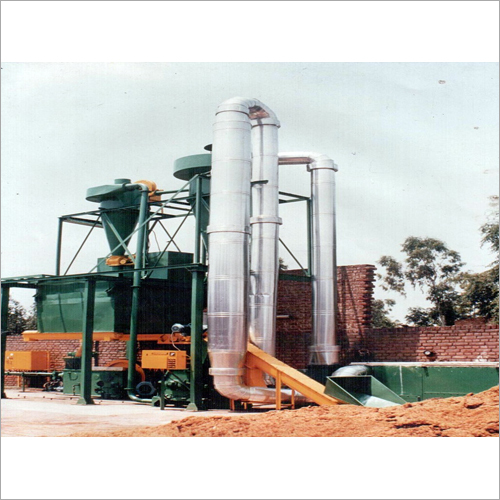
About Air Pollution Control System
With vast industrial knowledge and deep market understanding, we have been able to emerge as a trusted manufacturer and supplier of Air Pollution Control System. This well-equipped control system has great capability in providing dust-free environment. It is a most effective system in processing the material of capacity ranging from 2000 m3/Hr to 20000m3/Hr. It uses thermal energy to dry and is based on in-depth understanding of heat transfer phenomenon between the hot air and wet biomass. Air Pollution Control System is available in different specifications as per clients requirements.
Features ofAir Pollution Control System:
- Ability to handle up to 55% moisture in single stage dryer
- Ability to dry even fibrous biomass
- Low power consumption
Commercial dryer sizes:-
- TD 300
- TD 450
- TD 525
- TD 60
- TD 80
- CTD 45
- CTD 525
- CTD 60L
- CTD 60H
- CTD 80L
- CTD 80H
FOR RAW MATERIAL:-
- COIR PITH
- INDUTRIAL WASTE
- AGRO & FARM WASTE
- SAW DUST
- COCPEAT
- BAGASSE
Our Dryers use Thermal Energy to dry and are based on in-depth understanding of heat transfer phenomenon between the hot air and wet biomass.
Our CTD driers can effectively dry material with up to 55% moisture. We offer systems for upto 5 tons/hour on dry basis.
Highlights:
Fuel to water evaporation ratio up to 1: 4.5.
- Ability to handle up to 55% moisture in single stage dryer.
- Ability to dry even fibrous biomass like bagasse, coir, barks etc.
- Low power consumption.
- Dampers and Temperature controllers provided for safety.
Advanced Steel Construction: Crafted from high-grade steel, our Air Pollution Control System ensures superior strength, corrosion resistance, and long-term durability even in challenging industrial environments. This build quality supports substantial weight capacities, making the unit suitable for a wide variety of heavy-duty industrial uses.
Versatile Applications and Easy Installation: This system is tailored for diverse industrial applications and can be quickly implemented by manufacturers, suppliers, or distributors throughout India. Its adaptable voltage range and simple air cooling system support ease of installation and seamless integration into existing workflows.
FAQs of Air Pollution Control System:
Q: How does the air cooling system improve the performance of the Air Pollution Control System?
A: The air cooling mechanism helps regulate the operating temperature of the system, preventing overheating and ensuring consistent, efficient performance during prolonged industrial use. This contributes to the longevity and reliability of the equipment.
Q: What industries can benefit from installing this Air Pollution Control System?
A: This system is ideal for various industrial sectors such as chemical, manufacturing, and processing industries where controlling emissions and maintaining air quality standards are critical. Its robust design and adaptable power range make it suitable for both small-scale and large-scale operations.
Q: When is the optimal time to install or upgrade an air pollution control system in a facility?
A: It is advisable to install or upgrade the system before starting operations or when there are noticeable increases in emissions beyond regulatory limits. Routine assessments of air quality and compliance requirements can also signal the need for installation or upgrades.
Q: Where can this Air Pollution Control System be sourced in India?
A: The system can be procured through authorized distributors, manufacturers, and suppliers operating throughout India. Direct inquiries or visits to industrial equipment suppliers will help in accessing the product and related support services.
Q: What is the process for warranty support if there is an issue within the first year?
A: Should a problem arise within the first year, customers can contact the supplier or manufacturer for warranty service. The unit is covered under a comprehensive 1-year warranty, which includes repair or replacement of defective parts as per the warranty terms.
Q: How is the installation of the Air Pollution Control System carried out in an industrial setting?
A: Installation typically involves on-site assessment, system integration with factory ventilation, and connecting it to the existing power supply within the 220-440V range. Professional technicians usually conduct the setup to ensure compliance with safety and operational standards.
Q: What are the primary benefits of using this steel Air Pollution Control System in an industrial environment?
A: Key benefits include reduced industrial emissions, compliance with air quality regulations, improved workplace safety, and protection of expensive equipment from airborne contaminants. The durable steel construction ensures the system withstands rigorous industrial demands over time.